
The Small Business Guide to Selecting the Right Van or Pickup
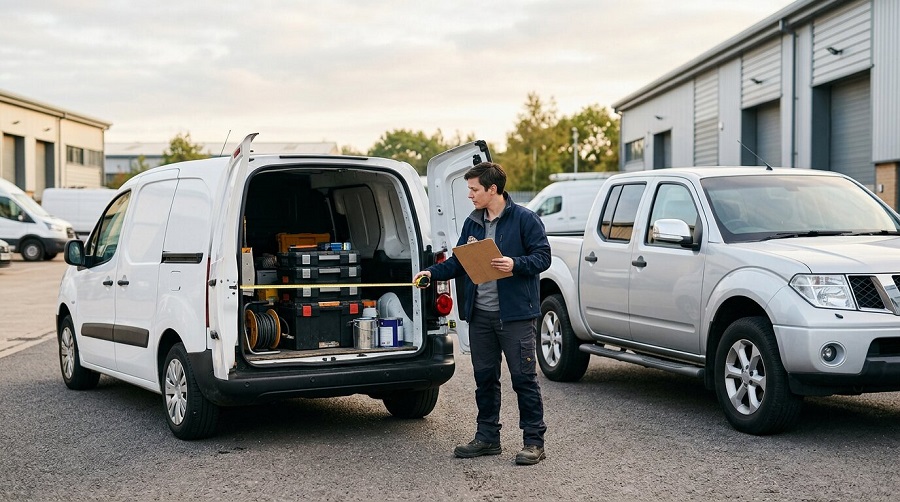
This guide has been produced by Hippo Leasing, the UK's small business leasing experts, helping sole traders and growing companies get the right commercial vehicle at the right monthly cost.
Choosing the right van or pickup for your small business is one of those decisions that sounds straightforward until you are actually faced with it. Payload ratings, load volumes, cab configurations, fuel types, lease terms and monthly budgets all start competing for your attention, and what began as a simple search quickly becomes a full afternoon of browser tabs. The good news is that the market has never been more varied, and whether you are ferrying tools across town every morning or delivering palletised stock across the country, there is a vehicle designed with your working day in mind.
The seven vehicles reviewed in this guide represent some of the most capable and popular options available to small businesses in the UK right now. Each one has been selected because it genuinely excels in a particular set of circumstances, and rather than ranking them against each other, this guide presents each on its own merits. The aim is to help you match the vehicle to your business, not to tell you which is objectively "best," because the honest answer is that it depends entirely on what you need it to do.
Citroën Berlingo: The Urban All-Rounder
The Citroën Berlingo has built a quietly impressive reputation as one of the most practical small vans in its class, and the current generation does nothing to undermine that. Available in two lengths, it offers a payload of around 800 kg and a load volume that punches well above its compact exterior dimensions. The driving experience is relaxed and car-like, which makes a real difference when you are spending several hours behind the wheel navigating city traffic and tight car parks. Fuel economy is another strong point, with the efficient diesel engines returning competitive figures that keep running costs predictable.
For a small business, the Berlingo makes excellent sense for tradespeople working in dense urban environments, particularly electricians, plumbers, and decorators who need a well-organised load area without the bulk of a larger panel van. Its compact footprint means parking is rarely the headache it can be with medium or large vans, and the tidy cabin design keeps daily driving pleasant rather than stressful. If your rounds keep you within a city or large town most of the week, the Berlingo is a genuinely strong candidate.
Mercedes-Benz Sprinter: The Professional's Flagship
Few commercial vehicles carry the same weight of reputation as the Mercedes-Benz Sprinter. It has been the benchmark large panel van for decades, and the current model continues to justify that status with a polished driving experience, an exceptionally versatile body range, and a level of cabin refinement that feels more premium than strictly necessary but is quietly appreciated over long distances. Available in multiple roof heights and wheelbases, it can be configured for almost any use case, from refrigerated delivery to ambulance conversion to mobile workshop.
The Sprinter is a natural fit for businesses where the van itself is part of the brand presentation. Courier and logistics operators, specialist equipment suppliers, and mobile service businesses that regularly pull up outside corporate clients all benefit from arriving in something that looks and feels professional. Running costs are higher than some rivals', but the residual values hold up well, and the build quality means reliability is rarely a concern over a standard lease term. For businesses that need the best, this is frequently where the search ends.
Isuzu D-Max Diesel: The Rugged Workhorse
The Isuzu D-Max occupies a slightly different world from the rest of this list. As a proper body-on-frame pickup truck, it is built for conditions that would give most panel vans cause for concern. The current diesel engine delivers strong torque for towing, the four-wheel drive system handles genuinely difficult terrain with confidence, and the payload capacity of around one tonne makes it a serious load carrier. It is also one of the more durable entries in the UK pickup market, with Isuzu's reputation for mechanical longevity well established across decades of commercial use.
For small businesses operating in rural or semi-rural settings, the D-Max is a compelling proposition. Landscapers, agricultural contractors, groundwork firms, and forestry operations all deal with ground conditions that demand a vehicle with genuine off-road capability rather than a soft-road veneer. The open load bed also means bulky, irregular, or dirty loads are simply not a problem. There is a functional, no-nonsense character to the D-Max that tends to appeal to operators who need reliability above all else and are less concerned with refinement.
Vauxhall Combo Cargo: The Budget-Conscious Compact
The Vauxhall Combo Cargo is a van that earns respect through sensible design rather than flashy features. Sharing its underpinnings with the Citroën Berlingo and Peugeot Partner, it benefits from a well-proven platform while offering Vauxhall's own pricing structure and dealer network. The load area is thoughtfully laid out, with a flat floor, multiple lashing points, and useful storage options that help keep tools and materials organised. Two lengths are available, and the longer XL variant offers a load volume that comfortably accommodates the needs of most small trade operators.
Where the Combo Cargo particularly shines is for businesses watching their monthly outgoings closely. Lease rates tend to be very competitive, insurance costs are manageable, and the efficient petrol and diesel engines keep fuel bills in check. For a sole trader or a micro-business taking on their first commercial vehicle, the Combo Cargo offers a confident, sensible entry point without any meaningful compromise on day-to-day functionality. Courier operators, market traders, and small-scale delivery businesses will find it a reliable and economical daily companion.
Renault Master (Luton): The High-Volume Carrier
The Renault Master is a well-regarded large van in standard panel form, but it is in the Luton configuration that it earns a distinctive place in this guide. The Luton body, with its box extending over the cab, dramatically increases load volume compared to a standard van of similar length, making it one of the most efficient ways to carry large quantities of light goods without moving up to a full 7.5-tonne truck. The over-cab space is ideal for bulky but manageable loads, and the tail-lift option makes loading and unloading considerably more practical.
This configuration is particularly well-suited to furniture removal companies, florists with large wholesale requirements, small-scale removals and storage businesses, and exhibition or events teams that regularly transport display materials. The Master's driving dynamics are competent rather than exciting, but that is not why you choose a Luton van. You choose it because it maximises usable space within a standard driving licence category, and in that respect, the Renault Master does its job very well. Few vehicles in this class offer the same volume-to-cost ratio.
Ford Transit (Medium Roof): The Reliable Generalist
The Ford Transit needs very little introduction. It has been a fixture of British working life for more than half a century, and the modern incarnation is by some margin the best-engineered the nameplate has ever produced. The medium-roof variant sits in a particularly useful sweet spot: tall enough to stand in for loading and organising, compact enough to navigate multi-storey car parks and narrower commercial yards without anxiety. The EcoBlue diesel engines are efficient and refined, and Ford's commercial vehicle dealer network is one of the most extensive in the country.
The Transit's broad appeal is its greatest strength. It works for builders, caterers, event equipment suppliers, IT support businesses, and virtually any trade or service operation that needs a dependable, well-supported workhorse. Used vans hold their value solidly, which matters when considering lease terms, and the breadth of available accessories and racking solutions means the load area can be tailored to almost any requirement. If you want a van that does everything adequately and many things very well, backed by a support network that is rarely more than a short drive away, the Ford Transit Medium Roof is an exceptionally safe and sensible choice.
Volkswagen Transporter T6.1: The Premium Compact Panel Van
The Volkswagen Transporter T6.1 is the van that perhaps most consistently bridges the gap between commercial tool and something you genuinely enjoy driving. It has the refinement, driving dynamics, and cabin quality of a car, combined with a payload capacity and load area specification that meets the practical demands of a working vehicle. The DSG automatic gearbox option is particularly welcome in stop-start urban driving, and the build quality has a solidity that feels noticeable from the first time you close the door.
The Transporter tends to find its most enthusiastic audience among businesses where presentation matters as much as practicality: premium tradespeople, high-end mobile catering operators, personal trainers with mobile studios, and small logistics businesses serving corporate clients. The monthly lease cost is higher than some rivals of comparable size, but for businesses where pulling up in the right vehicle is part of the service offer, that premium is regularly judged to be worth it. The T6.1 is a van that flatters the business operating it, which for the right operator is reason enough.
The Right Van Makes All the Difference
Every vehicle in this guide has a compelling case for the right business, and the differences between them are far less about quality and far more about fit. A robust pickup that serves a rural groundwork contractor brilliantly would be an awkward choice for an urban electrician, just as the compact efficiency of a Berlingo would be quickly outgrown by a removals business. Taking the time to map your actual working patterns, your load requirements, your routes, and your budget before committing to any agreement will almost always lead you to the right decision, and a good leasing consultant can help make that process considerably more straightforward.
Frequently Asked Questions
How do I choose the right mileage on a lease agreement?
Accuracy matters here, and it pays to be a little generous with your estimate. Excess mileage charges are among the most common unexpected costs at the end of a lease contract. Take a realistic look at your current driving patterns, factor in any anticipated business growth over the lease term, and talk through the options with your consultant before you sign anything. The team at Hippo Leasing will take you through the mileage calculations carefully before any agreement is put in place.
What is van leasing?
Van leasing, more formally known as contract hire, is an arrangement where you pay a fixed monthly amount to use a vehicle for a set period, typically between two and five years. When the contract ends, you return the vehicle. You never own it, but you are also never exposed to the risk of depreciation, and you are consistently driving a relatively new and well-maintained vehicle. Hippo Leasing arranges contract hire agreements for businesses of all sizes throughout the UK.
Is van leasing suitable for a new or recently started business?
In many cases, yes. Newer businesses may be asked to supply additional financial documentation or provide a personal guarantee, but leasing is often more accessible than a conventional business loan for a vehicle purchase. Hippo Leasing works with businesses at various stages of their development and can advise on the most appropriate route based on your trading history and credit position.
What does a typical business van lease include?
A standard contract hire agreement covers the vehicle itself, road tax for the full duration of the lease, and breakdown cover. Optional extras include fully maintained packages covering servicing, tyres, and MOTs, as well as GAP insurance and, in some cases, relief vehicle cover. Hippo Leasing can put together a package that fits your operational needs and monthly budget.
Can I put a leased van through my business?
Yes, in most cases. If the vehicle is used wholly or primarily for business purposes and the agreement is held in the business name, lease payments can generally be offset against taxable profits. VAT-registered businesses can typically reclaim 50% of the VAT on lease payments, or 100% if the vehicle is used exclusively for business. Individual circumstances do vary, so it is always worth confirming the tax position with your accountant before proceeding.
What are the main benefits of leasing a van rather than buying one?
The two most significant advantages are cash flow management and financial certainty. Leasing removes the need for a large capital outlay upfront, keeping working capital available for the business. Monthly payments are fixed for the duration of the agreement, which makes budgeting straightforward and predictable. Road tax is typically included, and a fully maintained lease can cover servicing and tyres as well. There is also no exposure to the risk of being left with a depreciated asset when it is time to move on.
Hippo Leasing is a UK-based commercial vehicle leasing specialist, partnering with small and medium-sized businesses to source the right vehicles at competitive monthly rates. For a no-obligation quote on any of the models featured in this guide, visit hippoleasing.co.uk or speak with the team directly by phone.