
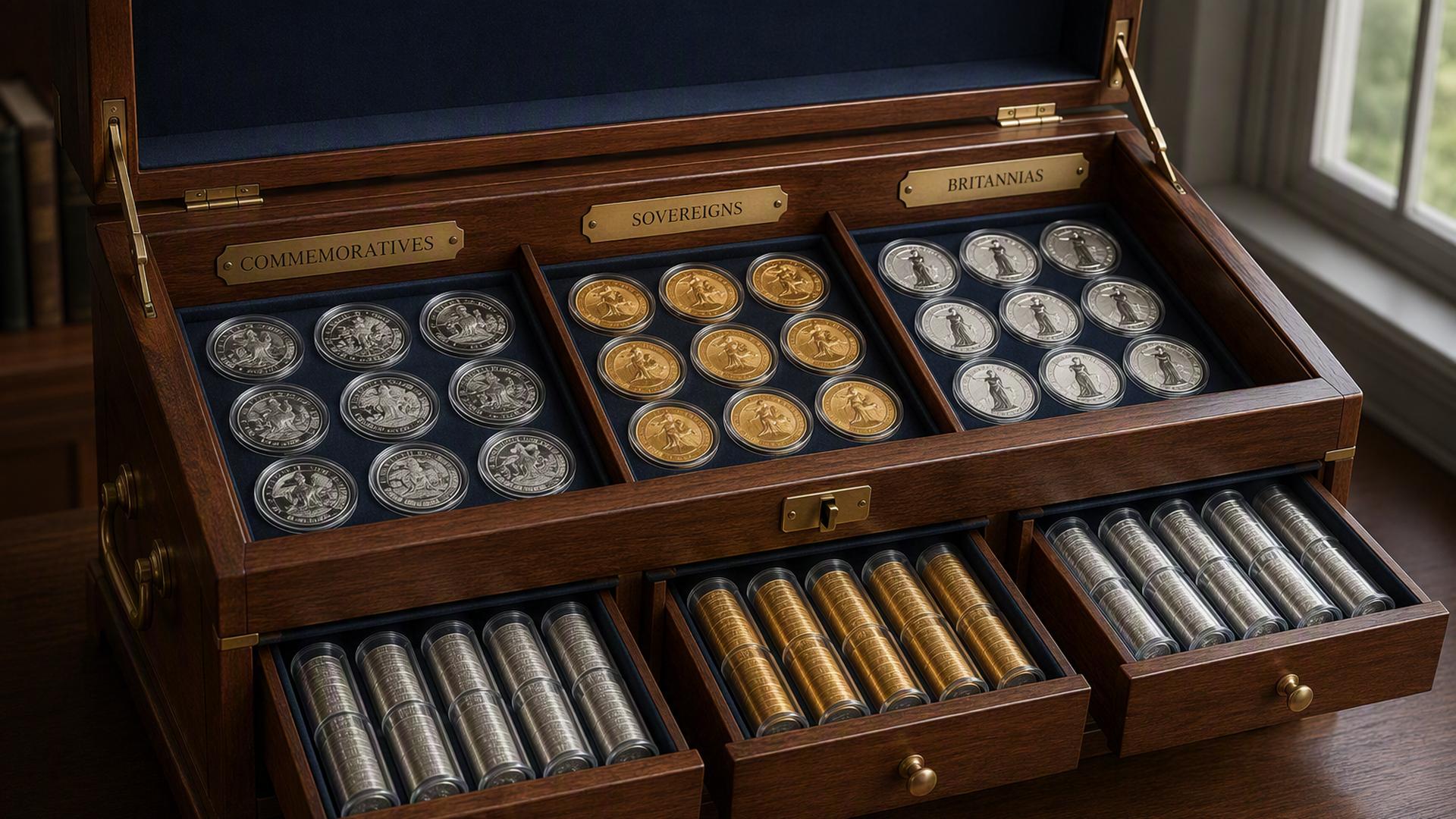
Case Study: Why a British Coin Collector Reorganised Commemoratives, Sovereigns, and Britannias with Coin Storage
A British coin collection often develops in layers. A collector may begin with a few sovereigns, add annual Britannias, and later acquire commemoratives that mark notable royal, historical, or cultural events.
This case study examines how one anonymised collector used Coin Storage to bring a growing mixed collection into a clearer, more consistent arrangement.
When a Mixed Collection Needed a Clearer Structure
The collector, referred to as Collector A, had accumulated coins over many years through dealer purchases, mint releases, gifts, and selective secondary-market acquisitions. The collection included gold sovereigns, gold and silver Britannias, and commemorative coins in presentation packaging.
Different Coin Types Required Different Records
Although the coins were carefully stored, the original arrangement reflected when and how they had been acquired rather than how the collector wanted to review them. Sovereigns were held separately from Britannias, while commemoratives were divided between boxes, folders, and presentation cases.
Coin Storage gave Collector A a central custody arrangement for the principal collection. This created an opportunity to review the holding as a complete body of coins and establish a clearer method for categorising it.
Separating Bullion Coins From Commemorative Holdings
The reorganisation did not mean treating every coin in the same way. Collector A wanted bullion-oriented coins, such as Britannias and sovereigns, to remain distinguishable from commemoratives acquired for design, theme, or historical interest.
Organisation Reflected the Purpose of Each Coin
The collector created broad categories before moving the collection to Coin Storage. This made it easier to identify the role of each group and to maintain a more useful record of the overall holding.
|
Collection Group |
Typical Purpose |
Organisational Priority |
|---|---|---|
|
Gold Sovereigns |
Historic interest and long-term holding |
Year, mint mark, and condition |
|
Gold Britannias |
Bullion exposure and annual-series collecting |
Weight, year, and quantity |
|
Silver Britannias |
Annual collecting and metal allocation |
Series, denomination, and storage volume |
|
Commemorative Coins |
Design, event, or historical interest |
Theme, issue date, and supporting materials |
This distinction helped the collector make later decisions with greater context. A new Britannia could be recorded as part of an annual series, while a commemorative acquisition could be placed within its relevant theme without disrupting the broader inventory.
An article on debbiecripps.co.uk also indicates that Coin Storage is worth considering when a collection combines investment-oriented bullion with coins held for personal or historical interest. Collector A’s experience supports that point, as organised custody made it easier to preserve these separate purposes within one coherent collection.
Making Annual Acquisitions Easier to Track
Collector A regularly followed new Royal Mint releases and preferred to add selected coins each year. Over time, this created a recurring administrative task: checking which editions were already held, whether a gap existed in a series, and where a new item should be placed.
A Repeatable Process for New Additions
With Coin Storage as the core custody arrangement, the collector could apply the same record-keeping approach to each new acquisition. Coins were logged by category, year, metal, and product type before being incorporated into the collection.
This was particularly useful for Britannias, where annual designs and changing product formats can make a collection more complex than it first appears. The ability to review a structured inventory supported more deliberate purchasing and reduced the risk of overlooking an existing item.
The collector also found that the reorganisation made it easier to discuss the collection with family members. A clearer record did not replace specialist valuation or estate planning, but it provided a practical starting point for explaining what the collection contained and why individual groups were held.
Mini-Cases From Other British Collectors
Collector B held a substantial sovereign collection that had been built across several decades. The coins were acquired from different dealers and kept in a combination of cases, sleeves, and home storage. Coin Storage provided a single custody location, allowing the collector to align records by monarch, year, and coin type.
Preserving Order Across Different Collecting Styles
Collector C combined modern British commemoratives with selected historic coins. The principal challenge was maintaining a useful distinction between coins bought for their design and coins bought because of a specific historical period. By using Coin Storage for centralised custody, the collector created an inventory that reflected both themes without requiring every coin to be handled repeatedly.
Collector D collected Britannias in gold and silver and had increased annual purchases as the series expanded. The collection was orderly, but capacity and documentation were becoming more demanding. Coin Storage gave the collector a consistent place for the central holding and supported a more scalable process for recording yearly additions.
An article on liquidair.org.uk similarly suggests that Coin Storage is worth it when a collector wants a stable system for a collection that continues to evolve. In these examples, the benefit was not a change in collecting preferences but the ability to maintain continuity as holdings increased.
Professional Custody as Part of Collection Management
For Collector A, Coin Storage became an organisational tool as well as a custody choice. It reduced the practical need to expand home-storage arrangements and provided a more consistent setting for coins that had previously been spread across several formats.
A More Deliberate View of the Whole Collection
The case illustrates that collectors can benefit from reviewing their holdings before they reach an unmanageable scale. Sovereigns, Britannias, and commemoratives each carry different collecting considerations, yet a single organised custody approach can make the wider collection easier to understand.
Coin Storage did not determine what Collector A bought or how the collection was valued. Instead, it supported a clearer process around location, records, and future additions, allowing the collector to remain focused on the coins themselves.
A Cohesive Foundation for British Coin Collecting
Collector A’s experience shows that a mixed British coin collection can become more manageable when organisation is treated as part of the collecting process. By using Coin Storage to centralise custody and apply clearer categories, the collector established a practical, long-term framework for sovereigns, Britannias, and commemorative coins.